
A short poem, some notes, and examples about the weird relationship between competitors: Do you love or hate your competition, and is competition itself good or bad?
Before the match, they are your greatest enemy.
You work your ass off for years—blood, sweat, and tears, to beat the opponent.
You push yourself beyond what you thought was possible, to come out victorious.
During the match, nothing else matters.
You persevere through the pain and struggle to take home the first-place trophy.
You risk injury, or worse, but you don’t care. All that matters is winning.
After the match, you are no longer enemies.
You have shared a bond of competition, and you pushed each other to give it your all.
There is great respect, even if there is no friendship.
You may meet again someday.
You will always carry a fierce competitive flare for your rival, but not from a place of malice.
You may feel tension, anger, and animosity, but in no different a way than towards your own siblings.
Do you love or hate your competition?
It is safe to say that at the end of the day, the answer is both.
Without your competitor, you are half the man you can be.
Nobody pushes you to improve harder than your greatest rival.

Notes
As an athlete and an avid competitor my entire life, I sometimes questioned the counterintuitive desire for competition. If there was no competition, you would automatically win. Don’t we all want to just win?
So I did some reflecting on my own experiences, but also started paying closer attention to the behaviors of different rivals in business and sports during their respective triumphs and tribulations. Then I came to a conclusion.
Competition is a privilege. It is the medicine that tastes or feels unpleasant but is necessary for growth.
Competition is the thing that keeps raising the bar. It’s the budding symbiosis between two specimens that results in mutual improvement.
Just look at nature. Plants grow taller and faster by competing for access to sunlight. Animals become more efficient hunters and foragers by competing for food. Even on a cellular level, microorganisms evolve new ways to acquire and use resources by competing for food, water, and space.
As humans, competition pushes us to become better. It proves to you that human ability has not peaked. Your ability has not peaked. It is the only thing that can make you discover that you have another gear.
Funny enough, you yearn to win, but you don’t want zero competition. And true competitors don’t even want poor competition. You would rather go head-to-head with the best in your class than a handicapped beginner. This is the difference between seeking a vainful ego boost versus wanting a challenging but honorable attempt at achievement. The two are vastly different, and the intense feelings derived from the latter are unmatched.
Whether you admit it or not, you want a worthy opponent. Someone who will give you a challenge and who you can proudly say you’ve beaten, or honorably say has beaten you on that day.
When you seek competition, you seek that thrill of challenge and adventure that cannot be replicated elsewhere in its entirety. Sometimes, such as in business, unwanted competition seeks you. But this is no different and the mutual thrill still remains.
Competition is that dance partner. You feed off each other. And without it, you are worse off.
It is bittersweet.
I will end off with a lengthy but profoundly insightful excerpt from the book, The Inner Game of Tennis by Timothy Gallwey. One of my favorite reads of all time. In Chapter 9, Timothy talks about the mindset of an athlete/competitor.
“The surfer waits for the big wave because he values the challenge it presents. He values the obstacles the wave puts between him and his goal of riding the wave to the beach. Why? Because it is those very obstacles, the size and churning power of the wave, which draw from the surfer his greatest effort. It is only against the big waves that he is required to use all his skill, all his courage and concentration to overcome; only then can he realize the true limits of his capacities…
From this example the basic meaning of winning became more clear to me. Winning is overcoming obstacles to reach a goal, but the value in winning is only as great as the value of the goal reached. Reaching the goal itself may not be as valuable as the experience that can come in making a supreme effort to overcome the obstacles involved. The process can be more rewarding than the victory itself…
In tennis who is it that provides a person with the obstacles he needs in order to experience his highest limits? His opponent, of course! Then is your opponent a friend or an enemy? He is a friend to the extent that he does his best to make things difficult for you. Only by playing the role of your enemy does he become your true friend. Only by competing with you does he in fact cooperate! No one wants to stand around on the court waiting for the big wave. In this use of competition it is the duty of your opponent to create the greatest possible difficulties for you, just as it is yours to try to create obstacles for him. Only by doing this do you give each other the opportunity to find out to what heights each can rise.
So we arrive at the startling conclusion that true competition is identical with true cooperation. Each player tries his hardest to defeat the other, but in this use of competition it isn’t the other person we are defeating; it is simply a matter of overcoming the obstacles he presents. In true competition no person is defeated. Both players benefit by their efforts to overcome the obstacles presented by the other. Like two bulls butting their heads against one another, both grow stronger and each participates in the development of the other.”
Examples
I wanted to start by researching instances where I believed competition displayed its most foul form. I tried finding proof that competition is in fact bad. Instead, what I concluded was that true competition is not taken personally. When that line is crossed, that is when competition turns into what can only be described as malice or mania; When one loses sight of the entire nature of competition and instead solely intends to harm the opponent. A loss of control over emotion and thus lost sight of the objective. Another way to look at it is that if you have a sound mind and zero respect for the adversary, then you wouldn’t even give them the time of day to compete against them. But if you do step into the arena and battle, then you believe they are a worthy opponent and that is competition. This applies to any and all forms of competing. As we will soon find out, whatever happens before or after the battle is a conversation of sportsmanship, but doesn’t affect the definition of competition. This first example is a perfect way to demonstrate the extreme limits of rivalry in the most brutal, primal sport in the world.
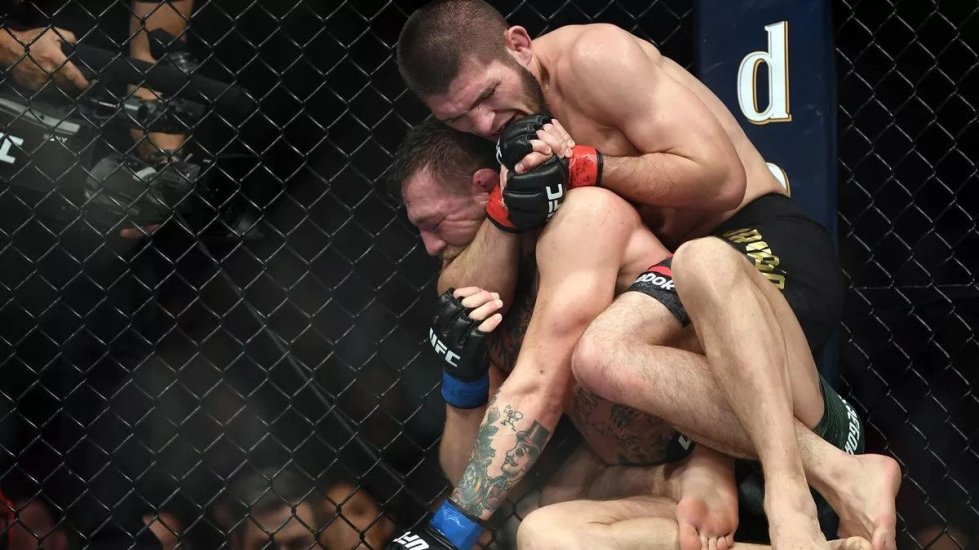
Conor McGregor vs. Khabib Nurmagomedov is infamous for having one of the most disrespectful and vile clashes between competitors in UFC history. Lines were crossed as the two fighters traded insults on social media and in interviews, and McGregor made particularly offensive remarks about Khabib’s religion and family. In the lead-up to the fight, McGregor and his team also vandalized a bus carrying Khabib and other fighters. This incident further inflamed the rivalry between the two camps. The fight itself was a dominant performance by Khabib, who submitted McGregor in the 4th round. However, the aftermath of the fight was even more controversial than the buildup. Immediately after the fight, Khabib climbed over the cage and attacked McGregor’s teammate Dillon Danis. This sparked a brawl between the two teams, which had to be broken up by security. Khabib’s actions were widely condemned, and he was suspended from the UFC for 9 months. The clash between McGregor and Khabib is one of the most infamous sporting events in history. It is a story of two rivals who pushed each other to the limit, both inside and outside the cage. However, the beauty of competition is that despite their genuine hatred towards one another, the two still understand and respect each other. Being two of the top fighters in the entire world with massive egos, they do not tolerate but they understand each other’s actions. After their clash, the two may never be friends, but they will always have respect for their bond of competition. Kabib has since said McGregor is “a great champion” and McGregor called Khabib the best grappler in MMA, and said he understands why he did what he did after their fight.

The rivalry between Steve Jobs and Bill Gates was one of the most iconic in business history. The two men were the founders of two of the most successful technology companies in the world, Apple and Microsoft. They were both incredibly competitive, and they pushed each other to innovate. But the rivalry was also very personal. Jobs and Gates had different personalities and different visions for the future of computing. Jobs was a visionary who wanted to create products that were both beautiful and easy to use. Gates was a businessman who wanted to create products that were affordable and accessible to everyone. The rivalry came to a head in the early 1990s, when Microsoft released Windows, a graphical user interface that was similar to the one that Apple had developed for the Macintosh. Jobs accused Gates of stealing his ideas, and the two men began a public feud. The feud continued for many years, but it eventually began to subside in the late 1990s. Microsoft invested $150 million in Apple, which helped to save the company from bankruptcy. Jobs and Gates also began to respect each other’s accomplishments. In 2007, Jobs and Gates appeared together on stage at the Macworld conference. It was their first public appearance together in many years. The two men joked about their rivalry, and they both praised each other’s contributions to the technology industry. Jobs died in 2011, but Gates has continued to speak fondly of him. In a 2015 interview, Gates said that Jobs was “one of the smartest people I’ve ever met.” He also said that Jobs was “a great visionary” who “had a huge impact on the world.” The two men never became friends, but they did come to respect each other’s accomplishments. And their rivalry helped to drive each other and the development of the personal computer industry, which has had a profound impact on the entire world.


On a lighter note, Rafael Nadal and Roger Federer have one of the greatest rivalries in the history of sports. They have played each other 40 times, with Nadal leading 24–16 overall, including 14–10 in finals. Despite their intense rivalry on the court, Nadal and Federer have a deep respect and admiration for each other. They have spoken highly of each other on many occasions, and they have even collaborated on projects off the court. In a 2019 interview, Nadal said that Federer is “one of the greatest players of all time” and that he is “a role model for me and for millions of people around the world.” Federer has also spoken highly of Nadal. In a 2018 interview, he said that Nadal is “the greatest clay-court player of all time” and that he is “one of the most competitive athletes I have ever seen.” In 2017, Nadal and Federer teamed up to play doubles at the Laver Cup. This was the first time that they had ever played doubles together, and it was a special moment for both players. In 2022, Nadal and Federer played their final match together at the Laver Cup. It was a moving moment for both players, and it showed the deep respect and admiration that they have for each other.

Tiger Woods and Phil Mickelson have had a complex relationship over the years. They have been fierce rivals on the golf course, but they have also shown respect and admiration for each other. In the early years of their careers, Woods and Mickelson were often seen as arch-rivals. They were both incredibly talented golfers and were both vying to be the best in the world. Their rivalry also led to some tension and animosity between the two. For example, in 2004, Woods reportedly refused to pair up with Mickelson for a charity event. And in 2006, Mickelson accused Woods of being “intimidating” and “arrogant.” Over the years, their relationship mellowed. They both experienced their own personal challenges and have come to appreciate each other’s accomplishments. In 2016, they worked together as assistant captains for the U.S. Ryder Cup team. This experience helped to strengthen their relationship, and they are now considered to be friends. In a 2018 interview, Woods said that his relationship with Mickelson has “come a long way.” He said that they “respect each other’s game” and that they are “able to have a good time together.” Mickelson has also spoken about his admiration for Woods. In a 2019 interview, he said that Woods is “the greatest golfer of all time.” He said that Woods has “elevated the sport” and that he is “a role model for golfers everywhere.”

Jeff Bezos and Elon Musk are two of the most successful entrepreneurs of our time. They are also two of the most competitive. Bezos is the founder and CEO of Amazon, while Musk is the founder of Tesla and SpaceX. The two men have been involved in a number of public feuds over the years. One of the most notable feuds began in 2014 when Bezos accused Musk of copying Amazon’s business model. Musk responded by saying that Bezos was “a copycat” and that Amazon was “a monopoly.” The two men have also clashed over their respective space exploration companies. Blue Origin, Bezos’s company, is competing with SpaceX to develop reusable rockets. In 2020, Blue Origin filed a lawsuit against NASA, alleging that the agency had awarded SpaceX a contract unfairly. Despite their feuds, Bezos and Musk have also expressed respect for each other. In 2018, Bezos said that Musk was “one of the most creative people in the world.” Musk has also said that he admires Bezos’s business acumen. While not mentioning Bezos specifically, Musk has previously made it clear that he always welcomes competition because it signals that the industry he’s in is vibrant, and it also raises the bar by pushing innovation and urgency. Overall, the relationship between Jeff Bezos and Elon Musk is complex and competitive. The two men have different personalities and different visions for the future. However, they both share a deep passion for innovation and technology. In recent years, the rivalry between Bezos and Musk has seemed to cool somewhat. In 2021, Musk congratulated Bezos on his successful flight to space. And in 2022, Bezos wished Musk luck with his Twitter acquisition. Even in feuds such as this where the respect and admiration aren’t as evident, the two may not publicly admit, but the benefits of their competition bring out the best in both of them.
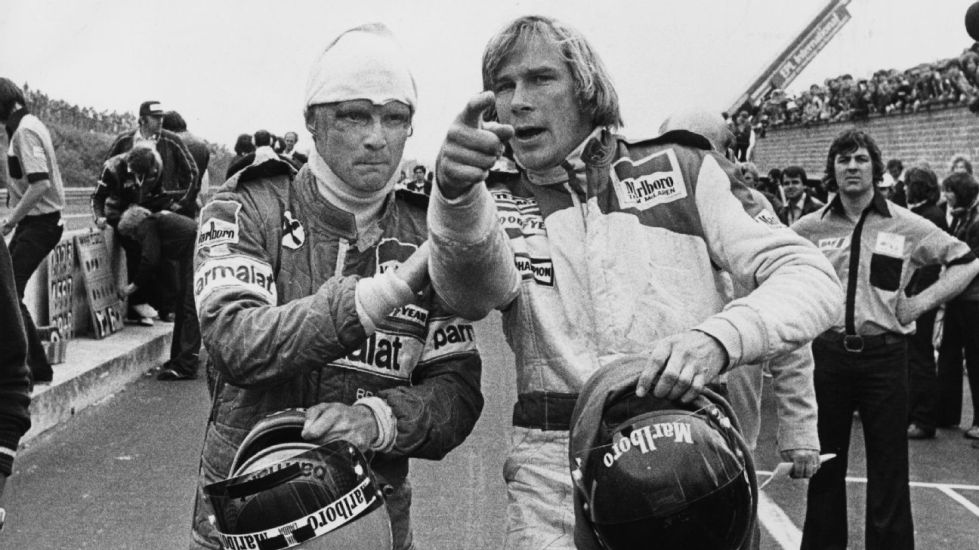
James Hunt and Niki Lauda had a knotty relationship. They were fierce rivals on the track, but they were also friends off it. Hunt and Lauda first met in Formula Three in the early 70s. They quickly became friends, and they were even roommates for a while. But then their friendship became strained when they both moved up to the more competitive Formula One in 1973. Hunt and Lauda were two of the most talented drivers in F1, and they were both vying to be the best in the world. Their rivalry came to a head in 1976, when they battled for the championship title. Lauda was leading the championship by a comfortable margin, but he suffered a horrific crash at the German Grand Prix. The crash left Lauda severely burned, and he was hospitalized for several weeks. Despite his injuries, Lauda was determined to return to racing. He missed just two races, and he returned to the championship fight (Lauda’s determination to win and compete arguably sped up his recovery and morale during a tough moment in his life). However, Hunt was able to catch up to Lauda, and the two drivers went into the final race of the season tied in points. Hunt won the final race of the season, and he clinched the championship by a single point. Lauda was disappointed to lose the championship, but he was gracious in defeat. He congratulated Hunt on his victory, and he said that he was “the better driver.” After Lauda’s crash, Hunt’s relationship with him deepened. Hunt was one of the few people who visited Lauda in the hospital, and he was a great support to him during his recovery. They remained friends until Hunt’s death in 1993. They were two of the most iconic drivers in F1 history, and their rivalry is still talked about today. In a 2013 interview, Lauda said that Hunt was “one of the very few I liked, and even fewer I respected.” (Watch the film “Rush” on Netflix for the story!)
 Economic Motivation