
If you want an advantage, look for side doors.
As someone who is not naturally smart, I’ve discovered a learning technique that has made me a much better investor and autodidact over the years. It’s a technique that anyone can adopt and is simple to understand—although takes time and effort to habitualize.
My philosophy for finding an edge, whether that be an insight into a lucrative investment, or a strategy to building a superior product is all the same. If you do what others are doing and read what others read, follow the same steps that others follow, then you will generally get the same results. Many proverbs reflect this; Busy roads lead to common places. Insanity is doing the same thing over and over and expecting a different result. Take the road less traveled, etc,.
To see why this is true, let’s first explore why investing can be profitable. In order to make a big return on an investment, you must see something that others don’t at the moment. You need to buy in when the price is low and sell when it’s high.
An investment is cheap when the price has dislocated from its value. Remember, price is what somebody is willing to pay; value is more elusive, but it’s what the asset is actually worth.

Theoretically, if somebody offered to sell you a working modern car for $10, you intuitively know that the price is dislocated from the value. Even if you resold the car for parts or scrap metal, you’d still make a large profit. So first you ask yourself, why is it selling for cheap?[1] Maybe the economy is bad, and the seller desperately needs the cash. Maybe there’s a glut of cars right now. But you know that the car is worth more than that, so you buy low.
Realistically, there will almost never be a situation where an asset is massively underpriced without encrypted reasons for being so. To reiterate, if it were obvious and actionable for everyone, then the price would already reflect its value. And if not, it is almost certainly a scam.
The encrypted reasons are often because either not many people have the skills or knowledge to identify or handle the investment, or because it requires large resources or special connections to identify and handle the investment.
Price is what you pay. Value is what you get.
Warren Buffett
Another example is investing in a distressed multi-family apartment building. The owner is desperate for cash and can’t fix it himself, so he wants to sell. For you to successfully invest, you’ll need the knowledge to calculate all costs required to get the apartments rent-ready. You need to know exactly what work needs to be done, what the projected rent rate is for its location, and what the stabilized yield is. This is the process of predicting future cash flows, and hence, determining its value. It’s perhaps the most important step in any investment cycle. Once you’ve calculated a working purchase price on the value-add project, you’ll need to negotiate with the seller, and either have a lot of capital or a solid lender and financing plan.
Say you successfully acquired the property at your profitable price target. The work has only just begun. You’ll need a realtor/lawyer to help with the transaction and legal items, and a network of reliable vendors to do quality remodeling at a decent price.
These are all barriers to entry. Not everyone is currently capable of identifying and handling this investment situation. This explains why the opportunity exists—why the price is dislocated from its value and why an investor can earn profit from the investment.
Even comparing two competent investors both seeking the same deal, one may be better prepared than the other. Both investors could have the same knowledge and experience, but maybe one has their real estate license and a vendor who can remodel the apartments for cheaper. So, they can afford to outbid the other investor since their expenses will be lower.
In another situation, two competing investors may be equal except that one of them has a very creative way to execute the investment that the other didn’t think of. Investor advantage doesn’t have to be a herculean task reserved for the elite. Sometimes it’s as simple as positioning, risk tolerance, determination, persistence, creativity, desired ROI, or special knowledge.
These situations exist in all types of investments.
There must be an opportunity that is encrypted but you’re able to decrypt using a deeper understanding of the asset and market than most others. If it were obvious that the economy was temporarily bad and that there was an oversupply of (AssetA), and the seller needed cash, then more people would’ve bid the price up. If it were obvious, then there wouldn’t be a dislocation in price to value. This applies to any and all assets.
How about information?
There was a point in time when dropshipping was a great business niche to get into. Now, it has become so saturated that margins are lower, competition is higher, and opportunities are scarce. Dropshipping is probably the first result of a Google/YouTube search on how to get rich. And there are tons of free, easy-to-find, quality information on how to do it. Counterintuitively, this is a red flag.
If you want to get rich, don’t watch the video on YouTube titled “How To Get Rich” that has a million views. Instead, watch the interview with the highly successful founder or investor that has only 1k views. That is where the advantage lies.
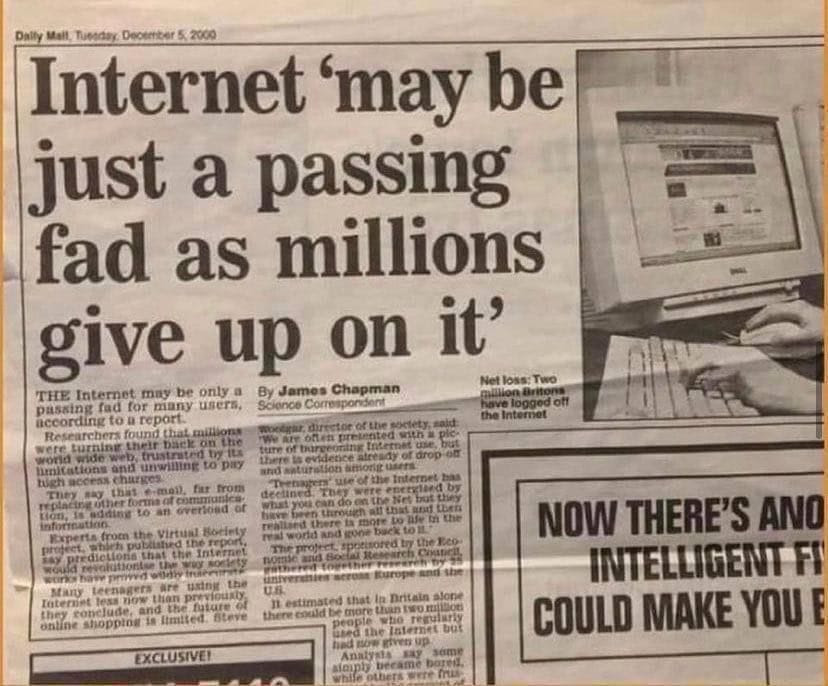
If you’re looking for advice on the stock market don’t act directly based on what Bloomberg says you should do or what will happen. In fact, Bloomberg’s advice will simply tell you how the broad market will likely react. Busy roads lead to common places.
The same applies to opportunities. If you want to secure that highly sought-after job, you might gain an advantage by deviating from the conventional application process and instead sending the recruiter a video resume displaying your esteemed accolades. Or even convince your previous manager to call the recruiter to sell your value.
The most fruitful information in a competitive domain is information that is not consumed by everyone. Often, the best advice on the internet comes from a blog with an antiquated web design and a terrible UX. Or from a dry and tedious peer-reviewed journal or a primary data source. These aren’t pleasant to read but are saturated in insights and statistics that, if you take the time to read through them, you will have an advantage over others.

It’s a barrier that many don’t have the patience to cross. It’s free information, but will cost you time, work, and mental effort to search and sift through the glut. You’ll often be looking for diamonds in haystacks, but the diamonds are in fact there.
The best part about learning from “side door information” is that it’s also compounding. You will learn esoteric evergreen skills in your domain that are not mainstream. Then, you’ll use that knowledge peripherally in other domains, or to build up complexity in its own domain.
The side door is a great analogy to explain this intellectual advantage. Whether we want to admit it or not, society is a pretty competitive landscape. You can visualize this as everyone trying to fight their way through the front door—doing things the conventional way. Common knowledge, skills, and strategies. But don’t be fooled by the crowded front door. While conventionalisms are still vital and rewarding, the unconventional modus operandi hides advantages.

You could fight your way to victory through brute force and superiority, but even then, you leave part of the equation to chance/luck. If you want a real advantage, you need to work your way around the building and find a new way in where not many people are. This is the side door.
Over there, you’re hardly fighting anyone for your way in. Most of the work is in actually finding it. Since it’s unconventional, you risk getting stopped by security or the door might be locked. But you don’t give up there and look for another one. Once you find it you are miles ahead.
[1] Your job as an investor is to investigate if there truly is a price dislocation. This takes work. In our reality, if a stranger offered to sell you their 2-year-old working car for $10, and other decent cars on the market were selling in that price range, I’d suspect a large societal catastrophe was the cause of the low price, bringing the down the utility of owning one and hence its value. Perhaps all the roads in the world were destroyed. You must consider what may be causing a potential price dislocation.
[2] Caveat: Copying is still a successful strategy. However, expect your upper limit to be below the person you are copying. The only way to get different or superior results is to do it differently. Look for side doors. Don’t follow the crowd.
[3] If you are young and motivated, then it pays to take on more risk. This means emphasizing more on what you stand to gain rather than what you stand to lose. Of course, don’t bet the farm or risk recklessly, but you have the luxury of taking on more risk. As you age and you don’t have as much time on your side, that’s when diversification and safer bets are more rational.
[4] Esteemed billionaire investor, Bill Ackman, once said a lot of the information he consumes to feed his investment decisions comes from the same sources that everybody else has access to; Bloomberg WSJ, CNBC, Financial Times, etc. What makes him benefit more from the same info we all consume is his underlying understanding of business and the economy. He knows how to use that information. It’s the foundation he has built that allows him to utilize the information for greater benefit. For more on this, read my essay Redundancy In Learning.

 Economic Motivation