I began taking flight lessons with no intention of becoming a commercial pilot or for any other agenda besides learning about aviation. Like anything challenging, this journey has had its ups and downs, moments where I’ve contemplated quitting, and moments of elation. Learning to fly has been completely different from what I thought it would be. Let’s start from the beginning.
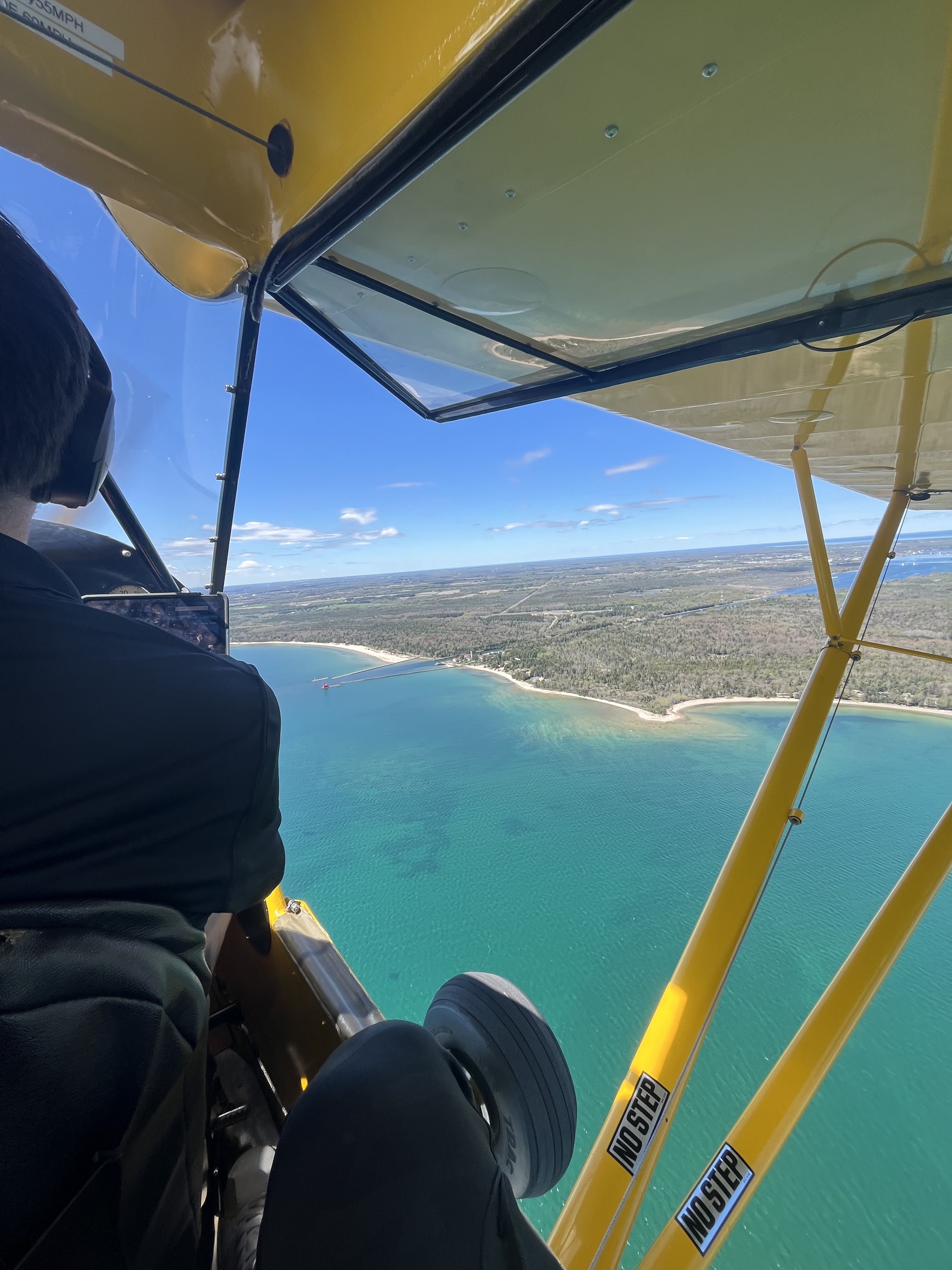
I took my first discovery flight on February 8th of this year and have since soloed a couple of times and am now sitting at nearly 18 hours of flight time. I have yet to fly cross-country, hopefully in the next week or two. So I’m by no means an experienced pilot or highly knowledgeable but can speak as a student en route to attaining his license.
I’ve been fascinated by planes from a young age. Not in a fanatical way, but in a casual curious one. I played a bit of Flight Simulator as a teenager, though in hindsight, not knowing at all what I was doing. But still having fun nonetheless. Fast forward a decade, and I still had no significant experiences around planes other than your normal airline travel as a passenger.
Then a close friend of mine joined an ATP (Airline Transport Pilot) flight school. This is a rigorous airline career pilot program designed to get you the licenses and certifications you need to become a commercial airline pilot. His enrolment probably contributed to my interest subconsciously as I didn’t think much of it at the time. He became obsessed with aviation, sharing with anyone who would listen to his knowledge on spatial disorientation from flying through clouds and how wings generate lift.
I was and still am deeply fascinated by automobile racing. I had just bought a fully race-modified car that broke down due to a blown electrical component that was difficult to replace. The hiatus from racing left me feeling bored, and my adventurous soul was hungry for another exciting odyssey. The criteria was simple; it must be challenging, thrilling, and intellectually stimulating with a steep learning curve, like racing or sailing.
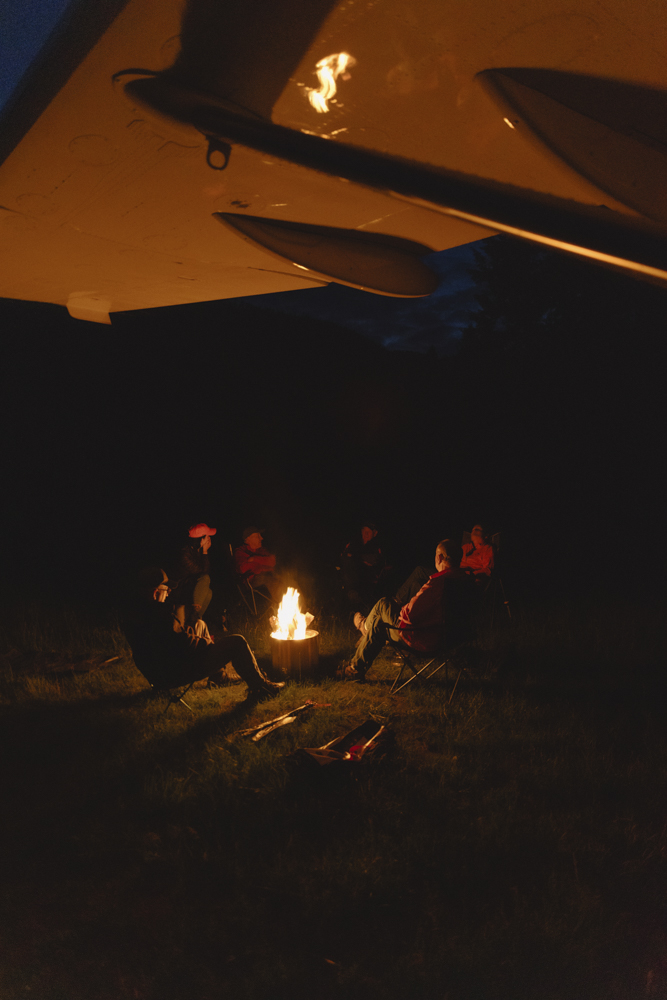
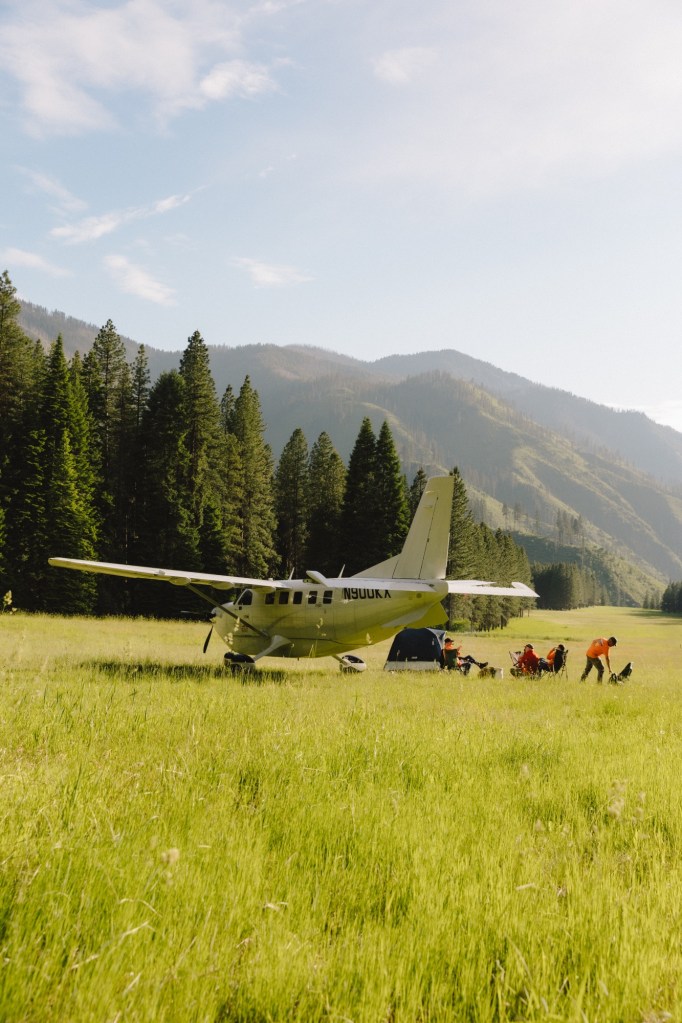
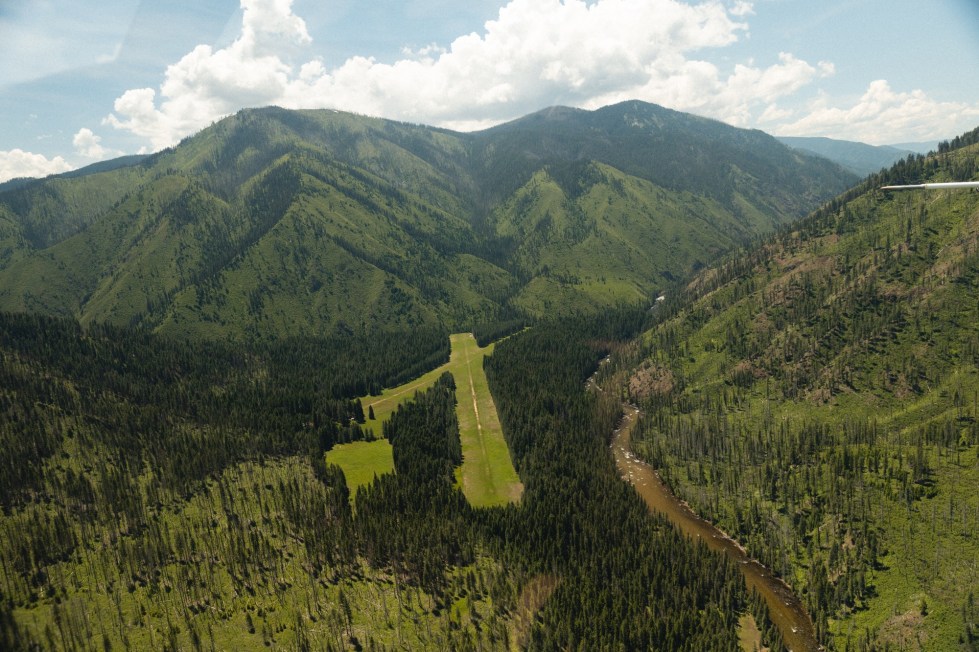
In addition to all the preceding forces, I serendipitously stumbled upon this Bloomberg article about Airplane Camping. The vivid descriptions and serene pictures were the final push to get me started.
“a former colleague posted about how she flew herself across America in a small aircraft to places you can’t normally reach by car—the kind of spots that enable you to take a deep breath and bask in the feeling of being truly away...
Backcountry flying is practiced almost exclusively in the US, though it’s also done in Canada and Australia. The US has vast tracts of public land with airstrips carved out decades ago for access to resources or to fight wildfires that, combined with more permissive laws, allow pilots to fly almost anywhere. Many of those airstrips no longer serve their original purpose, but the RAF works with more than 300 operators to keep them open and free for any pilot…
“The US has the best general aviation in the world,” Tamar says. “People reach out from all over to experience it here.””
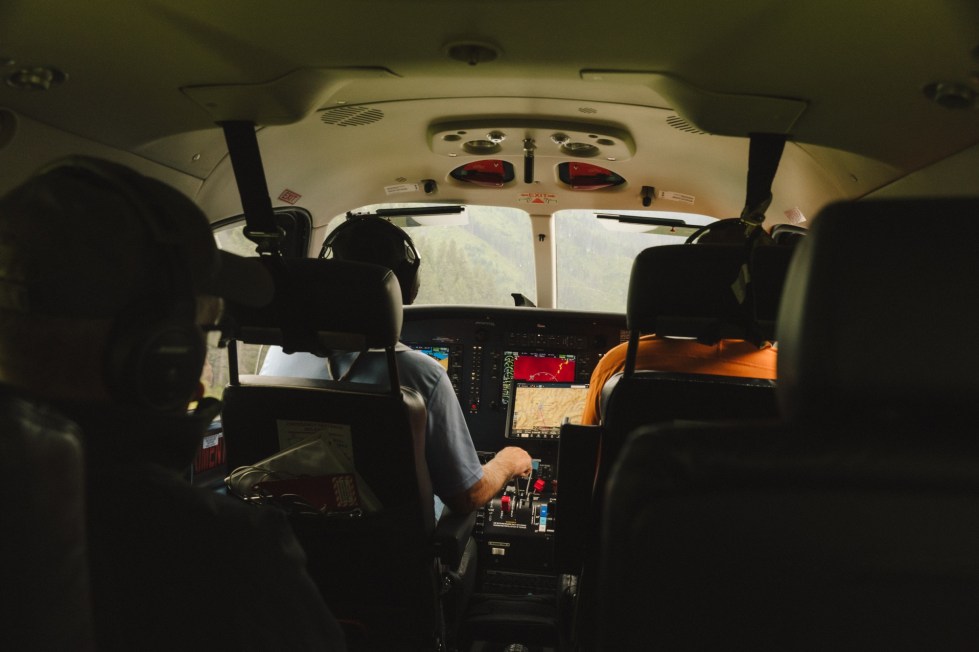
My long-simmering interest in aviation had finally boiled over. As if by fate, roughly a week later, I spotted an ad for a nearby flight school in the newspaper. That was the final push I needed to take action.
The first few lessons were overwhelming. I would return home exhausted and with a headache each time. It was during this period when I had the most doubts and thought there was too much to learn, I can’t do this. You get put into a small noisy plane that bounces around more than you’re used to such as in airliners, and you’re given tons of new information while trying to control an airplane for the first time. It is a lot to process at once.
There is a saying in aviation (which there are a million sayings in aviation) that A CFI could teach a chimpanzee to fly, but they can’t teach them to be an aviator (CFI is a Certified Flight Instructor—there are a billion more acronyms in aviation). To understand the complexities of aviation, it’s important to break it down.
Flying itself is pretty easy. Just keep the plane upright and coordinated, and avoid large abrupt inputs on the controls and you’ll do just fine. That’s why an instructor typically lets a student fly on the very first lesson, no matter how much prior experience they have. But oh man, there’s so much more to being an aviator.
According to AOPA, 80% of student pilots quit before attaining their Private Pilot License (PPL). There are several common reasons for this, including a lack of funds and inadequate guidance. Another common reason is that after a student completes their first solo flight, the initial excitement diminishes and the reality of the commitment sets in. This is where the transition from a mere flyer to a skilled aviator takes place, requiring a significant increase in both knowledge and skill level.
Before your first solo, you’re flying with the instructor. So you have someone to rely on for at least some of the tasks. Also, the instructor is the PIC (Pilot in Command) so they’re legally responsible for the safety of that flight. When you solo, you become PIC and are the total aviator. You need to Aviate, Navagate, and Communicate in that order of importance. Aviate meaning to fly the plane and avoid other planes and terrain. Navigating is to know where you are and where you’re going, and communicating is self-explanatory.
Dive deeper into those three tasks, however, and it begins to look like a black hole of information. Just when you start to feel like you’re getting proficient, you begin learning a new chapter of aviation. And this can continue as deeply as you want to go. Even if you stop at your PPL, you’re still continuously learning new ways to fly safely and proficiently. Otherwise, you can pursue more advanced licenses, certificates, and type ratings depending on your flying goals. You can never get bored.

Even for a basic PPL student pursuing their initial license, flying is much more than what’s seen on the surface. The approximate all-in cost can range from about $10,000-$15,000, a bit less than the average 4-year university tuition in the U.S. And the curriculum to become even just a recreational pilot is more comprehensive than people think. These are not suggestions, but requirements and they include:
Physics/aerodynamics: Understanding how a plane is able to fly and steer and how it behaves in certain situations and environments. Physicist.
Mechanics/aircraft systems: You must know how all parts of the plane work (mechanical and electrical) so you can use and prevent, recognize, and administer failures or abnormalities. Mechanic.
Decision-making: You spend significant time learning about ADM (Aeronautical Decision-Making). Rational thinker.
Flying: Learn to feel and maneuver the plane using gentle and precise control inputs with fine-tuned motor skills while navigating and communicating, sometimes under stress. Athlete.
Weather: Understand, at a high level, patterns, dangers, transcriptions, developments, causes, and effects all pertaining to weather. Meteorologist.
Communication: Fluently understand and speak the language of aviation used to communicate with other aviators and control towers. Communicator.
Navigation: Airports have specific procedures to enter, exit, and move around within. There are also airspaces everywhere above land and water that have different laws and characteristics. Navigator.
Aviation Law: FAA Regulations contain a plethora of specific stuff you can, can’t, must, and mustn’t do. Lawyer.
Calculations: No, you don’t need to be great at math to fly, but you do need to learn aircraft fuel/performance calculations, basic mind math, and proficiency with aviation calculators and formulas and memorize a few numbers for speeds, codes, and communication frequencies. Mathematician.
Looking at the list above, now you can see why even a chimpanzee can learn to fly but to be an aviator goes slightly beyond that.

To get your PPL, you’re required to obtain a medical clearance from a certified flight physician. My physician was a fascinating man with a wealth of stories and wisdom from his 30+ years of flying experience. One of the things he told me was that flying draws a unique crowd of people. It’s expensive, difficult, and time-consuming enough to where those with a current license are wholly passionate about flying. Anyone who is half-heartedly dedicated has enough deterrents to cause them to quit or lose currency.
Separately, during my first few lessons, my instructor told me I’d soon find out that flying is addicting. “Yeah, right,” I thought to myself.
Flying to me has been an intellectual pleasure—an addicting one as my CFI warned. I now religiously observe the weather, even on days when I am not flying. I revise my notes on airspace and aerodynamics, not to pass a test, but because I’m genuinely interested. I simulate entire hours-long processes from pre-flight planning to startup and shutdown on my flight simulator. You also learn many valuable things that can be applied to everyday life.

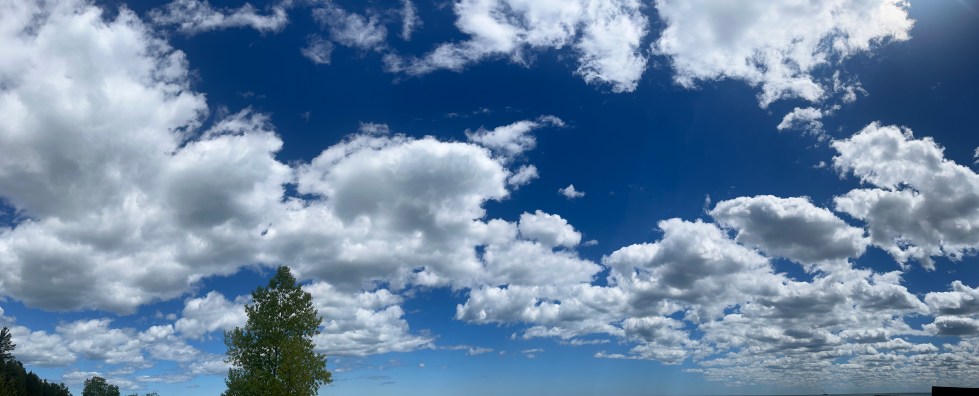
Pilots have the utmost incentive to learn in a meticulous manner because it is their life on the line. There is no greater incentive to a human being than survival. Also, as my physician acknowledged, pilots are typically passionate. And it’s easy to learn when you’re passionate about the topic.
Piloting also teaches you a new way of doing things. For example, the redundant yet effective use of checklists for every vital process no matter how many times you’ve already gone through it. You also learn to be multidisciplinary and to use that in reaching conclusions and solving problems. You learn the value of careful and detailed planning, including a plan B and C in case of emergency.
As a pilot, you learn things to practice-based fluency and not just for theory. Lastly, a pilot is a lifelong learner, both intentionally to prevent atrophy, but also naturally because new and unfamiliar events happen all the time. As they say in aviation, never say always.
The activity itself is also extremely gratifying and peaceful. A person with a new driver’s license is ecstatic because a car can take you anywhere on a 2-dimensional plane as long as a road or smooth surface exists. It unlocks a massive amount of freedom. Now, multiply that by another dimension and you have flying. In an airplane, you can go anywhere in a 3-dimensional space. Not just left, right, forward, and back, but also up and down. You’re also not restricted by the need for a road. You can fly nearly anywhere within the Earth’s atmosphere as long as there’s air.
If someone had told me in January that I would be learning to fly this year, I genuinely would not have believed them. I hadn’t budgeted financially nor timewise and had not at all expected to begin flying anytime soon. But when an opportunity arises, I think it’s best not to overanalyze and to trust your instinct.
It was a big commitment with no expected tangible ROI in the foreseeable future. But I knew I would learn a lot, meet interesting people, and open a door to new opportunities and experiences.
Although my journey in aviation has only just begun, I’m very glad I started and look forward to spending more time in the sky.
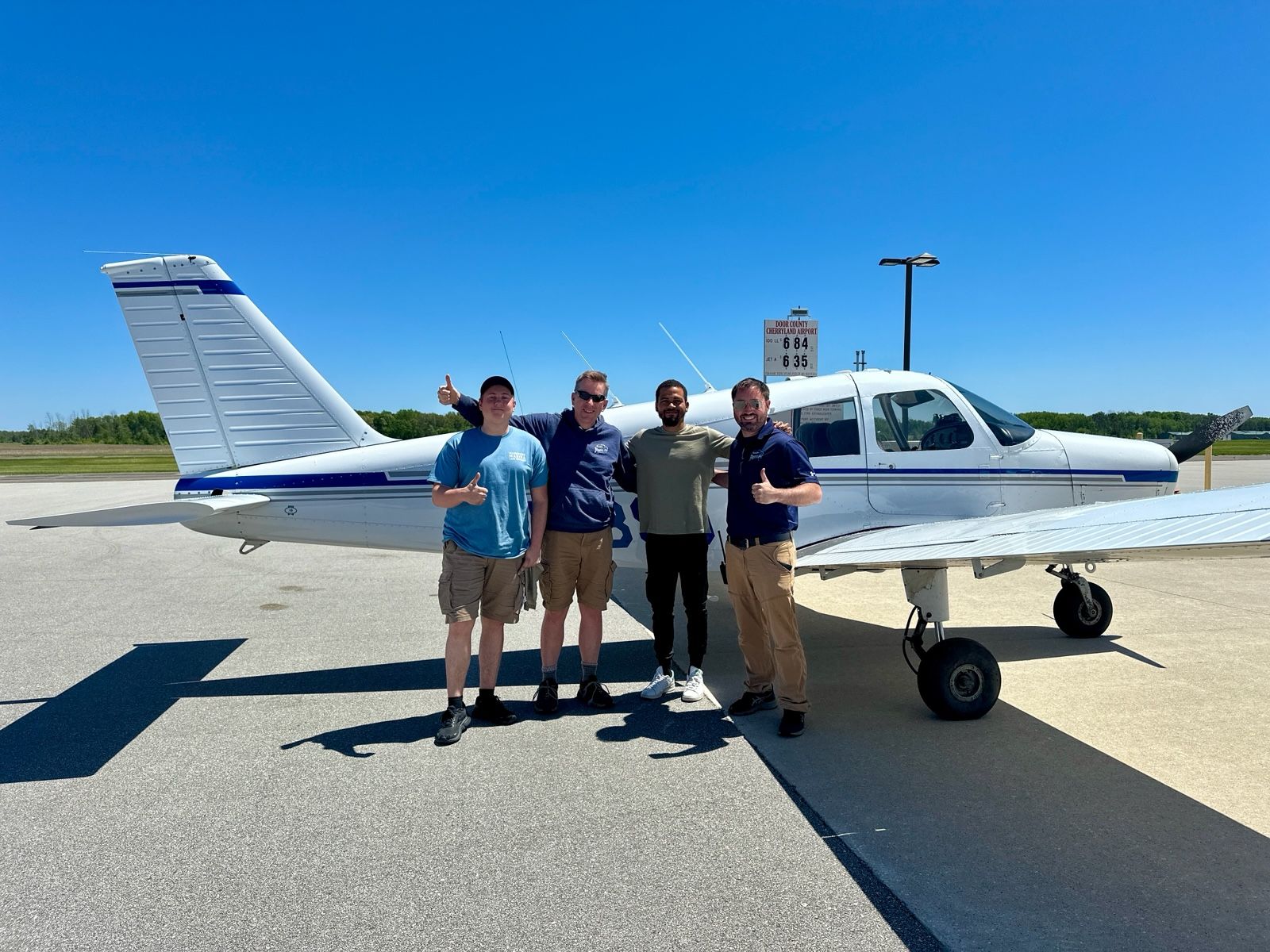
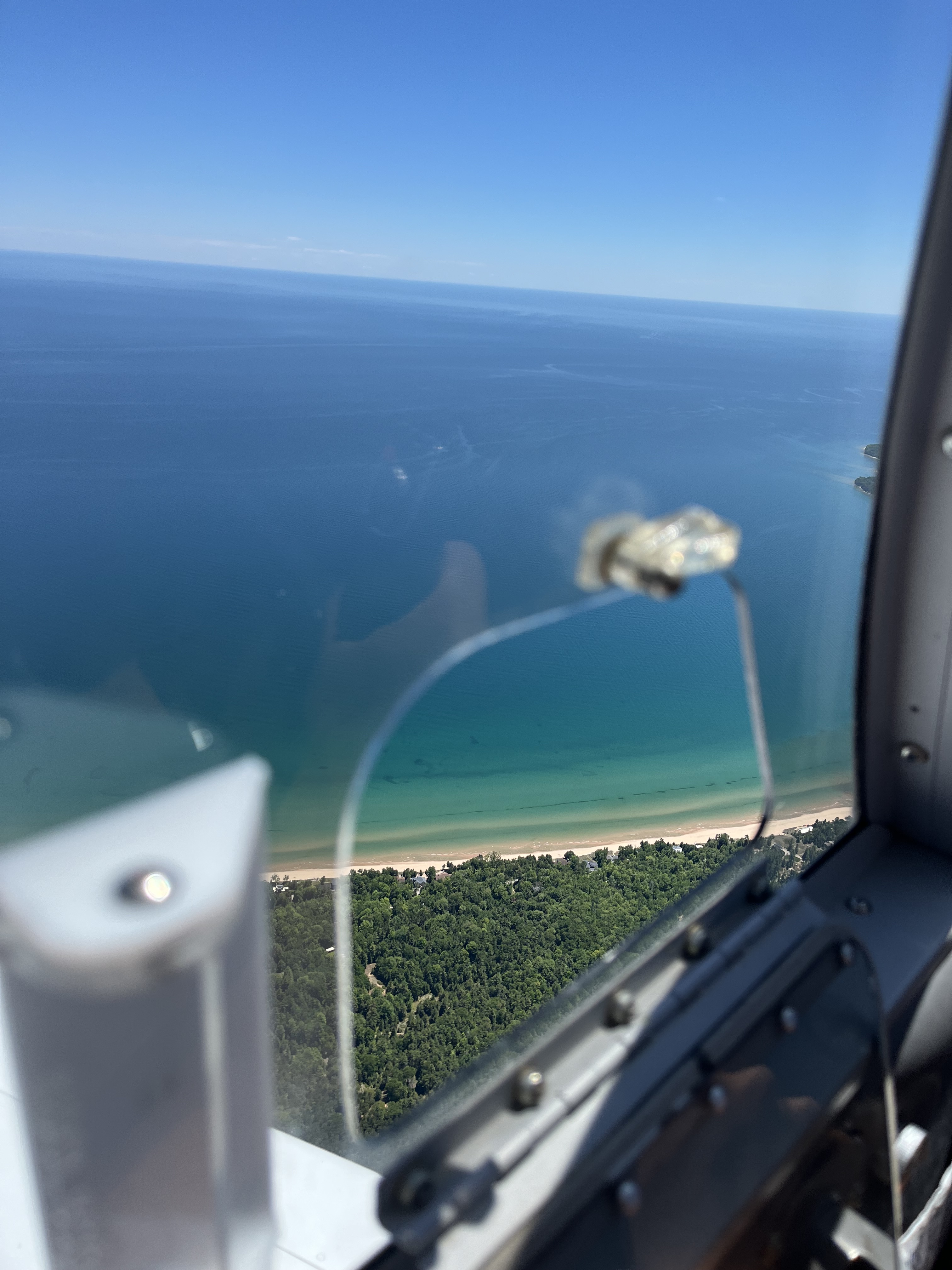
[1]
 Economic Motivation