
This entire essay, summarized in a paragraph: All great ideas and ventures are stupid and impossible until they work. If it were obvious and easy, it would’ve already been done. Therefore, it must be difficult and unobvious; though obvious to you. In order for someone to pursue something great, they must first see a dormant potential that is obvious to them but not obvious to others. This is almost by definition, delusion. Then they must be confident enough to sacrifice and valiantly pursue it despite the critics. This is Delusional Confidence; the birthplace of all greatness.
Remember being in kindergarten and the teacher would ask what you want to be when you grow up? Kids would enthusiastically yell, astronaut! President! Racecar driver! Professional athlete! How cute.
Then you grow up and acquire what’s known as perspective. It’s simply a part of maturing. Perspective hits you in multiple ways. You realize that greatness is not as easy as you once thought. You realize that it’s not customary to believe you can achieve greatness. You learn that greatness is reserved for Olympians and celestial beings[1]. And if you still somehow hold that sliver of delusion as an adult, you’re mocked and humiliated for still thinking like a naive child.
Ambition
I’ve previously written about ambition and how it determines one’s life direction. It’s certainly not a required trait to be happy. In fact, too much of it can potentially be detrimental.
A satiated person will arguably live happier than an intensely ambitious person because he is satisfied while the ambitious person is restlessly striving for something. The counterargument would be that the ambitious person is so in love with the pursuit that life is deeply meaningful; Look at already successful people working long into retirement age. There’s nothing else they’d rather do.
I see lofty ambition as a genetic mutation. Statistically, it’s rare or dormant in most cases. However, if the trait is active and you are highly ambitious, it’s a perpetual itch that will both burden and bless you for eternity.
As Paul Graham puts it, “Ambitious people are rare, so if everyone is mixed together randomly, as they tend to be early in people’s lives, then the ambitious ones won’t have many ambitious peers. When you take people like this and put them together with other ambitious people, they bloom like dying plants given water. Probably most ambitious people are starved for the sort of encouragement they’d get from ambitious peers, whatever their age.”
This is an important point to note because discussing ambitions with non-ambitious people usually yields a negative reaction and outcome. They discourage you either out of genuine intentions or spiteful envy and in turn, you feel undermined and attacked.
The genuine dissuaders have already acquired life’s perspective and want to prepare you for your turn to be slapped in the face by reality. They’re genuinely trying to protect you and have good intentions. They’ll urge you to get a safe job with benefits, stay away from risk, and don’t put all your eggs in one basket.
The spiteful ones will never admit it, but they just don’t want to see you succeed. There are deeply rooted psychological and sociological explanations for this going back centuries regarding social comparison, competition, group dynamics, and fear of change.
When you effusively describe your ambitions with a non-ambitious person, you’ll sound boastful, arrogant, and delusional. The conversation falls flat. They won’t enjoy the conversation, and neither will you. But with another dreamer? The conversation becomes invigorating. They’ll encourage you, offer help, and praise you for it. You’ll share ideas, inspire, and energize each other.
Ambition is somewhat subjective, fueled by internal passions or external rewards. How your goals are perceived depends on your audience; It might seem ostentatious or admirable. But the necessary ingredient of delusional confidence remains the same regardless of any level of ambition.
Underdog
Except for a handful of innovation hubs like Silicon Valley or Hong Kong, lofty ambitions are often fighting headwinds. Societal norms favor stability and proven paths over failure and experimentation. Results over invisible progress.
Tinkering, a breeding ground for breakthroughs, is undervalued. Failure isn’t much admired. And there just aren’t many people who would genuinely encourage an adult to chase their wild dreams—and even fewer who would continue to encourage after a few (inevitable) failures.
All these deterring factors are a baptism by fire. It’s a mental boot camp you must go through that prepares you for life as an ambitious. It’s training to overcome discouragement and persist. Most of all, it teaches you to either have an unshakable belief in yourself and vigorously pursue your aspirations or live a moderate life.
Unfortunately, the ambitious confidence of many adolescents is often diminished during this challenging period. There are two solutions to this juvenile self-belief decay.
The first solution is to have encouraging parents who help to develop and support your confidence through adolescence and teach you to embrace failure and individuality. You know when successful people say they were lucky? This is often a large part of what they’re referring to.
Nobody chooses their parents, where they will grow up, or the type of people they are surrounded by during their vital younger years. Yet studies show that these very factors play a significant role in a person’s future social mobility, career earnings, and likelihood of poverty. The second solution is more in your control. It is to realize that anyone who has achieved anything great has persisted despite naysayers.
I define greatness as any bold achievement that requires sacrifice and work. It’s not confined to making a lot of money or becoming famous. It could be becoming the first in your family lineage to escape poverty or graduate from university. It could be publishing a book as a dyslexic. Even building a loving family can be great depending on the circumstances.
Regardless, to achieve greatness you must hold on to, as hard and as long as you can, what I call delusional confidence. Delusional. Confidence. I think that’s precisely the best way to describe it.
Self-belief (Confidence)
Ali Tamaseb has spent thousands of hours manually amassing what may be the largest dataset ever collected on startups. Comparing billion-dollar startups with those that failed to become one—30,000 data points on nearly every factor.
In his book, Super Founders, he shares that the median age at which founders started their billion-dollar business is 34. This age is approximately only nine years after the brain fully develops and only ~44% through the average American’s life expectancy. That’s pretty young if you ask me.
I think it’s no coincidence that so many successful founders tend to be relatively young. One large reason is that when you are young, you’re more likely to still have delusional confidence whether intentionally or naturally, as every young person once has.
Furthermore, this average age of 34 is only for when they started their billion-dollar business. These founders were likely ambitious long before their big success. It’s also likely that they’ve all started smaller companies or side projects prior.
Building on the insights of Paul Graham, a highly respected voice in the startup community whose principles have helped countless founders, “Most successful founders would probably say that if they’d known when they were starting their company about the obstacles they’d have to overcome, they might never have started it. Maybe that’s one reason the most successful startups of all so often have young founders.”
Or how about a quote directly from the founder of one of the largest companies in the world, Nvidia’s creator, Jensen Huang, “Building Nvidia turned out to have been a million times harder than I expected it to be—than any of us expected it to be… If we realized the pain and suffering [involved] and just how vulnerable you’re going to feel, the challenges that you’re going to endure, the embarrassment and the shame, and the list of all the things that go wrong—I don’t think anybody would start a company. Nobody in their right mind would do it.”
A surprising number of successful companies benefit from their founders’ fresh perspective, free from established industry norms. This sort of innocence/ignorance is both from the standpoint of having a first-principles mindset and possessing delusional confidence. You need to be crazy enough to jump in with both feet not knowing if there are sharks in the water.
I have yet to hear of a case where greatness was achieved without overcoming skeptics and adversity. This is precisely why the right mindset and unwavering persistence are so crucial. Let’s illustrate this point with a true story, though I’m paraphrasing; During a conference, an aspiring entrepreneur asks the successful entrepreneur “how do I know if I have what it takes to succeed?” The successful one then says, “since you asked me that question, you do not have what it takes.”
This mindset, or even how a person reacts to this sort of discouragement is what makes or breaks an entrepreneur[2]. You simply cannot rely on others to motivate or validate your ability. If a person, no matter how much you love or respect them, can convince you that you’re not capable of succeeding, then that’s your first problem.
David Senra has a podcast called Founders where he discusses notes and insights from reading countless biographies of histories world leaders. He’s respected by successful founders worldwide and has met with many of them. After collecting and analyzing perhaps more anecdotal data on founders than any other human, David summarizes all their commonalities into one single character trait: Self-belief (with a bias to action[3])
“A major point that pops up over and over again in these biographies of history’s greatest entrepreneurs is that belief comes before ability… If I had to distill everything that I’ve learned about the history of entrepreneurship from reading almost 250 biographies to as little words as possible, I would say that the entrepreneurs, the great founders of history, they would combine Kanye West levels of self-belief with the work ethic of Kobe Bryant.”
Not every startup is as crazy as a rocket company, but Elon Musk’s Space X endeavor is a textbook swing at greatness. It shows that even the most accomplished and qualified people face detractors when pursuing audacious goals. Regardless of status or past achievements, the path to greatness is never paved.
After Elon had already proved his ability by inventing the predecessor to Google Maps (Zip2) and revolutionizing finance through PayPal despite no prior experience in the industry, his friends staged an intervention begging him not to start a rocket company. You can probably guess how Elon reacted.
Prior to starting Space X, Elon had more than enough money to retire and live lavishly for the rest of his life. Yet he decided to risk bankruptcy attempting to revolutionize space exploration. At the time, the industry was infamously known as a money pit for intrepid new-money billionaires. No private spaceflight company had ever survived long-term, though many tried.

Fast forward to today, Space X has revolutionized spaceflight with a series of historic firsts. They’re the first private company to launch, orbit, and recover a spacecraft (Dragon) and send it to the International Space Station. They’ve broken reusability barriers by successfully landing and reusing the first stage of an orbital rocket (Falcon 9), paving the way for cheaper and more sustainable space access. And they’re now the world leader in private human spaceflight. Space X not only reduced launch costs but opened doors for a new era of commercial space exploration technologies.
Elon was delusional until he wasn’t. Not in the literal sense, because he initially estimated the probability of success below 10%, and they came close to failure many times. But he was delusional in the interpersonal sense in that he believed it was worth it to try, despite the people he respected the most saying he would lose everything. As he once said, “When something is important enough, you do it even if the odds are not in your favor.”
How about those before him who failed in the industry? Well, if we look to science, we can only disprove ideas. Every time you confirm something is the wrong way to do it, you’re ironically doing justice by teaching yourself and others in the industry what not to do. In other words, if Elon was the first person to ever try to privatize space exploration, he may have never been inspired in the first place, and his knowledge and information in the field would have been inadequate. He would have relied far more on luck in choosing the right path. This is why there’s nobility in trying.
In the late 19th century, the wealthiest man in the world, John D. Rockefeller sent a collection of letters to his docile son to share his perspectives, values, character ideology, and wisdom. To reiterate, these are lessons that one of the most successful industrialists in the history of the world was privately instilling in his heir to build an enduring family legacy. In this letter, Rockefeller teaches his son the importance of self-belief:
“Why are there so many losers? I think it’s because there are not many people who truly believe that they can do something and as a result, not many people really do. The power of faith can help us move a mountain. Some people really believe that they will succeed one day. They carry out various tasks with the mentality of, I’m going to the top. I was one of these people.
When I was a poor boy, I was confident that I would become the richest person in the world. Strong self-confidence inspired me to come up with various plans, methods means and techniques, and one step at a time to climb to the top of the oil kingdom. I never believe that failure is the mother of success. I believe that faith is the father of success. Victory is a habit. What I want is sustained victory. Believing that there will be great results is the driving force behind all great careers.
I have talked to many people who have failed in their business. When these losers were speaking, they would often unwittingly say, to be honest, I didn’t think it would work. Or I felt uneasy before I started. Or they’d say something like, in fact, it’s not too surprising that this has failed. This belief is a negative force. The level of confidence determines the level of achievement. Mediocre people live their life day by day believing that they can’t do anything. If they cannot raise their self-confidence, they will shrink in their self-judgments and become increasingly insignificant. What they think of themselves will also make others think of them in the same manner. So then these kinds of people will become insignificant in the eyes of everyone else.
I replaced the thought of failure with the belief of success. When I face a difficult situation, I think I will win instead of I might lose. When I compete with people, I think I am as good as them, not I can’t compete with them. When opportunities arise, I think I can do it instead of I can’t do it. I remind myself regularly, you are better than you think. Never, never sell yourself cheaply.”
And that is just one of many. Rockefeller had sent multiple entire letters to his son hammering on the importance of self-belief,
“Dear John, a person without ambition will not accomplish great things. This is what my friend, the automobile king, Mr. Henry Ford, confided in me when he came to see me yesterday. I admire this rich man from Michigan very much. He is a persistent and determined guy. He has almost the same experience as mine. Mr. Ford is the creator of a new era. No American can completely change the American way of life like he did. He has turned a car from a luxury into a necessity that almost everyone can afford. Mr. Ford’s ambition was to create a world where everyone can enjoy cars. This may seem unimaginable, but he succeeded. The achievement that Ford created proved one of my life’s credos. Wealth is proportional to the goal. Being the richest person in the world was the basis for my efforts and the strength to spur myself. The one sentence that I most often motivated myself with is, for me, second place is no different from last place. If you understand this, it will not be surprising to you that I ruled the oil industry as its undisputed king. A great life is the process of conquering excellence.”
Conviction (Delusional)
The word delusion in the phrase delusional confidence has a fine line between its literal definition and its figurative intention. This essay uses the figurative interpretation.
In a sense, you are somewhat literally delusional because so many others disagree or doubt the viability of your vision. But you’re not delusional to the extent that you believe you can bend the laws of physics or reality to achieve something. This is a fine line because, to others, your delusional confidence may seem like literal delusion. But you must be rational enough to realize true limitations vs things that are within your control.
You know that starting a successful business is possible because all successful founders are made up of a few tangible and achievable things. They simply must have the knowledge to identify a promising market and then build a good product. All of that entails assembling and, at least initially, leading a team, raising capital, solving tons of problems, and working hard.
This is of course highly simplified. But the point is, although it’s extremely difficult and the odds are against you, building a successful company logically falls into the delusional confidence category. By definition, if your business idea were obvious and easy, it would’ve been created already. Therefore, you are delusional for being so confident in your strange idea and for pursuing it wholeheartedly. This applies to every successful company and founder that has ever existed in history.
Just as heavier-than-air human flight was once deemed impossible, the truth is, until all possibilities have been tested, then it cannot be concluded as impossible. Just because something is improbable does not make it impossible.
One of the opening paragraphs of the article, Who Were The Wright Brothers published by the Smithsonian National Air and Space Museum, explores the vital role luck and delusional confidence played in their world-changing feat: “Several strong family traits contributed to the Wrights’ success. Wilbur and Orville were shaped by a family with an uncompromising moral philosophy and clear worldview. The Wrights’ parents taught their children that the world was an unfriendly place; untrustworthy people and evil temptations were everywhere. They were convinced that family bonds offered the only real support in life. This supportive home life gave Wilbur and Orville the self-confidence to reject the theories of more well-known and experienced aeronautical experimenters when they felt their own ideas were correct. The emotional anchor provided by their strong family often helped Wilbur and Orville keep going when they ran into difficulties in their research.”
The family played such a large role that the Smithsonian wrote a separate dedicated article exploring their contribution in shaping the Wright Brothers’ success. “The importance of family was central to the Wright brothers’ lives and a powerful influence on everything they did… Wilbur and Orville were shaped by a family with an uncompromising moral philosophy and clear worldview. The emotional anchor provided by their strong family often helped Wilbur and Orville keep going when they ran into difficulties in their research.”
As a rule of thumb, the more extreme the achievement, the more luck is involved. We could discuss at length what luck is. But essentially, it’s a factor that is not within our control. For example, family, genetics, health, upbringing, etc., Regardless of the amount of luck you have, greatness still requires and begins with delusional confidence.
“One interesting fact you are entitled to know is that I never took a course in economics. And with this striking lack of credentials, you may wonder why I have the chutzpah to be up here giving this talk. The answer is I have a black belt in chutzpah. I was born with it.” – Charlie Munger
Young And Confident
Nassim Taleb, a widely respected essayist, mathematical statistician, former option trader, risk analyst, and aphorist, shares “I have a single definition of success: you look in the mirror every evening, and wonder if you disappoint the person you were at 18, right before the age when people start getting corrupted by life. Let him or her be the only judge; not your reputation, not your wealth, not your standing in the community, not the decorations on your lapel. If you do not feel ashamed, you are successful. All other definitions of success are modern constructions; fragile modern constructions.”
When you’re young, you naturally tend to work with passion. You aren’t worried about the status quo or pleasing others. You approach things through a lens of novelty and possibility. Blogger and poet Jamey Boelhower shares his personal experience of getting hit with life perspective, or as Nassim calls it, ‘corrupted by life’
“And as I worked to publish the 20 Year Anniversary of my first book of poetry And I Never Told You, I came to realize as a poet, as a writer, that I had let myself down. Not that I ever stopped writing, but I let that part of me fall to the bottom of my priority list. As Nassim Taleb states, life corrupted me.
Corrupt might be a harsh word, but still true. As I read through other poems to add to the book, I noticed how the poems had more passion. They were raw, even undefined at times, but the poems represented my troubles and joys authentically. My poetry now is stronger in form and still reveals depth of emotions, but maybe not so openly. The poems have a guarded feel, more layers to get through. I’m not saying it is a bad thing, some of my favorite poems are from the last couple of years. What I hope you understand is how life has changed me to be more guarded in my works, to be more guarded in my everyday life. The irony is that I still feel the same pain.
Nassim Taleb’s quote seems to hint that life corrupts us with money, status, and things like that. But life can corrupt us with fear, pain, confusion, and simple busyness. What bill is due this week? What time is the dentist appointment? These things can blanket our dreams and even our hearts.”
Naturally, young people have not yet been ‘corrupted by life’. This is why they dare to dream of great things. As they age, many dreamers abandon their aspirations because the path to success feels unclear. They might be discouraged by a perceived gap between themself and their peers, or their goal might seem out of reach.

Momentum fuels motivation, and seeing small improvements helps keep us going. However, long stretches without visible progress are not uncommon. Here’s where a quote by Bill Gates rings true: “People overestimate what they can do in one year and underestimate what they can do in 10 years.” Growth happens gradually and then suddenly[4].
Another advantage of the tender age is that they’re more likely to embrace nerdiness or eccentric qualities, contrary to the norm. It’s in our nature to desire normality and to be liked because for thousands of years, that yielded survival and reproduction—which are the two main primitive drivers of a human being.
However, to achieve greatness, you must see something differently and fanatically pursue it despite others not seeing the potential or viability. You sort of need a nonconformist tendency. Not for vanity’s sake, but a genuine ability to question information and construct new insights.
The extreme of this is a nerd. To be a nerd means you’re passionate, driven, and deeply curious about something unpopular. This description is precisely the starting point of all successful entrepreneurs, whether they create an entirely new product or just revolutionize the way of an existing one. It is nerds who move the needles in society.
As you can imagine, most people who have achieved greatness don’t prioritize normality. It’s only important to a certain extent. Of course, you need to collaborate with many others to build anything of significance. But you also need a unique perspective and the ability to make unpopular decisions. The same ingredients will create the same results no matter how many times it’s repeated and vice versa. If you pay attention, you’ll find this phenomenon present in the story of every pioneer.
These peculiarities are beneficial not only in thoughts and ideas but also in habits and idiosyncrasies. Charlie Munger had such a peculiar mind and quirky mannerisms that he purposely wore plain clothes just to fit in. Elon’s teachers thought he was clinically retarded for being so focused in thought. Rene Descartes devoted his life to the pursuit of thought, and thus spent every single morning lying in bed thinking—never rising before noon. These are just a few of my personal favorites[5].
Nerdiness is admirable. Because that trait means to care more about curiosity than the opinions of others. As countless successful figures have pointed out, some level of contrarianism and a healthy dose of nonconformity are often stepping stones on the path to greatness.
“Here’s to the crazy ones, the misfits, the rebels, the troublemakers, the round pegs in the square holes… the ones who see things differently — they’re not fond of rules… You can quote them, disagree with them, glorify or vilify them, but the only thing you can’t do is ignore them because they change things… they push the human race forward, and while some may see them as the crazy ones, we see genius, because the ones who are crazy enough to think that they can change the world, are the ones who do.” – Steve Jobs
Intuition
“Intuition is thinking that you know without knowing why you do.” – Nobel Prize-winning economist Daniel Kahneman.
Intuition and confidence go hand in hand because there is a lot of uncertainty on the path to great achievement, so you occasionally need to rely on judgment. Intuition is more of an instinctive feeling rather than conscious reasoning. It’s not backed by data or mathematically calculated. Rather, it’s a collection of a person’s prior knowledge and experiences that can be mixed to form a new insight. I like to describe intuition as tacit knowledge or simply wisdom.
Steve Jobs once emphasized, “Intuition is a very powerful thing, more powerful than intellect, in my opinion. That’s had a big impact on my work.” His successor, Tim Cook, credits intuition for many of the important decisions he’s made in his life and career. Is it a coincidence that both leaders of Apple, the world’s most valuable company, cherish intuition?
How about Richard Branson “I rely far more on gut instinct than researching huge amounts of statistics.” Another baron, Jeff Bezos, says “All of my best decisions in business and in life have been made with heart, intuition, guts… not analysis.” and “If you can make a decision with analysis, you should do so. But it turns out in life that your most important decisions are always made with instinct and intuition, taste, heart.”
Red Bull is another great example of the importance of intuition. Its founder, Dietrich Mateschitz, was earning over $500 million a year in dividends from his company later in life. His idea of Red Bull came from a newspaper article he read while lying in bed. Even though he went to business school, Dietrich doesn’t believe a lot of the things he was taught. Instead, he developed his own company-building philosophy that is very unique to him. “Mateschitz has amassed his wealth despite or perhaps precisely because he’s at odds with some basic business principles. If someone says to him that the primary goal of a company is to maximize profit, he simply declares that to be incorrect. He thinks longer term and more broadly than his competitors. ‘I just don’t believe everything I’ve learned at business school.’”
Intuition is so important in business because in order to profit, you need some sort of advantage. Due to the complexity of business, the economy, financial markets, and human behavior, there is no equation for success in all situations. Some decisions cannot be calculated and reasoned. As Peter Theil describes it, “The paradox of teaching entrepreneurship is that such a formula necessarily cannot exist; because every innovation is new and unique, no authority can prescribe in concrete terms how to be innovative.”
Intuition can be scary to implement because it requires confidence. You need to trust your gut. This means not always having a logical explanation for your decision—which understandably will come with resistance from others. You need to have delusional confidence to carry out intuition.
Why You Should Want Greatness
This essay discusses how to achieve greatness. It’s also helpful to know why you should. If you’ve made it this far into the paper, you likely already have an answer.
Nonetheless, there are a few motivators. The selfish motivators are clear-cut and don’t need much elaboration; You’ll feel fulfilled, proud, secure, and all that valid good stuff. We’re also social creatures and are inherently loving. Even a person who ‘hates people’ would suffer in a world without people. So, improving the world in some way, be it for your kids, your friends, strangers, or even just yourself, is a powerful motivator.
Anyone who understands human history is astonished by the technology, infrastructure, and wealth we have built over time.


Advancements have driven enormous improvements to humanity throughout civilization and greatly improved our quality of life. The cool thing is, you can choose to add to that in some way. Despite how far we’ve come, there is still a lot more we can and should do to improve life for billions of people. And there are infinite ways to contribute, no matter how big or small.
I would encourage everyone to dream big. Because even if you fall short, you would still be paving the way for the next person to pick up the baton. All greatness is standing on the shoulders of giants.
“People are mistaken when they think that technology just automatically improves. It does not automatically improve. It only improves if a lot of people work very hard to make it better, and actually it will, I think, by itself degrade” – Elon Musk
Final Words
I tried to abstain from making this essay a motivational fluff piece. Rather, my intention is to emphasize the significant role that delusional confidence has in achieving greatness. This insight, I hope, will spark inspiration in you. As you move forward, pay attention to it in those striving for or who have already achieved greatness.
Society needs eccentric people. The crazies who are willing to challenge the status quo. The contrarians who believe things should be done a different way and try to make it happen. The tinkerers who test theories and gizmos. It’s okay to disagree with a lot of them. After all, humans once wanted a faster horse until we were given the automobile.
Frankly, without these people, we would not have any of the lifesaving, life-enhancing, wealth-producing, humanity-progressing technology that we have today. Because it begins with someone who is bold enough to challenge what has always been done to create what has never been done before. Starting with delusional confidence, you can change the world one step at a time.
“It often requires more courage to dare to do right than to fear to do wrong.” – Abraham Lincoln
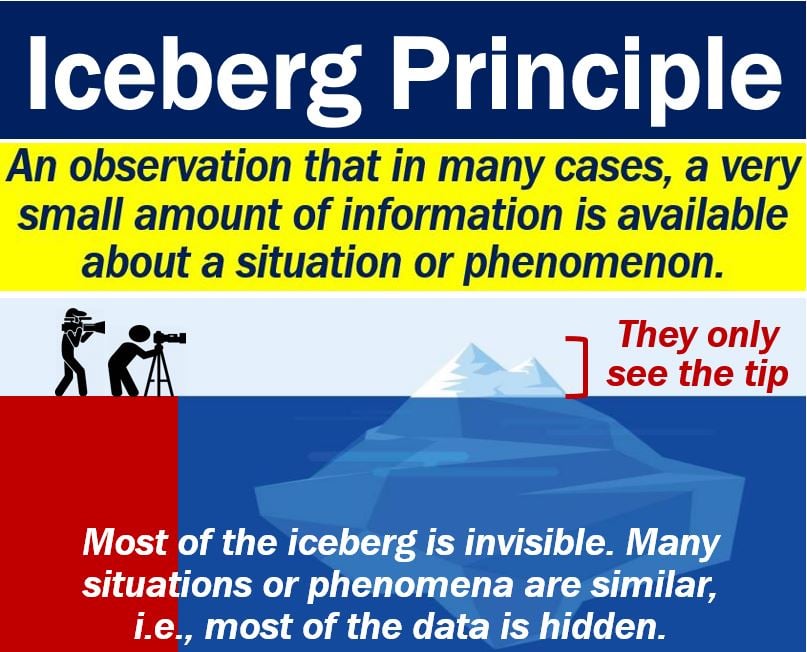
[1] For many reasons, anecdotes/stories have played a crucial role in the transfer of knowledge throughout human history and are still widely used today. The problem with a story is, by nature, it must have a captivating element, otherwise it wouldn’t be a story. And so all the boring yet important bits get left out or are underemphasized. The typical story of a successful founder has abundant info on the big moments in their life. However, it is the quiet moments of them working in silence that contributed just as much—if not more to their success. This is the iceberg principle. It’s why greatness may seem out of reach; We cannot see much of the boring, necessary, and sometimes obvious and achievable work that is required.
[2] I’ve heard countless stories of successful athletes and businesspeople talking about the one defining moment in their lives where they chose to go all in: When someone they love tells them to be realistic. Tells them they don’t have what it takes. Tells them they’re not as gifted as the top people. That one moment then pushed them to be great.
[3] It’s one thing to be confident and another to be confident and driven. There are many successful people who are very comfortable with their life and achievements. They’d now rather spend time with family or doing something less demanding. In their mind, they could still easily multiply their wealthy if they so choose; they’re still delusionally confident even if they do not act on it. The trait is hard to gain but also hard to squander. But a bias to action or a drive is needed to materialize it.
[4] The growth paradox explains the compounding forces of your efforts, network, and opportunities that present themselves. Maybe the industry you’re destined for hasn’t been created yet (60% of all jobs today didn’t even exist yet in 1940). If you want to be an actor, maybe you just haven’t yet met the person who will set you up in a big role. Many successful people can recall a single moment that changed their life, despite all the years of work that went on in the background. Other successful people recall their journey as a slow and steady gradual growth with no singular moment. Every journey is different. But if you don’t see much progress right now, just remember, a lot can happen in one year, one month, one week.
[5] Elon Musk’s parents “got called in to see the principal, who told them, ‘We have reason to believe that Elon is retarded.’ He spent most of his time in a trance, not listening, one of his teachers explained.” Elon had an exceptional ability to focus, using that to indulge in books, video games, and later in business. Charlie Munger once said that he was nonconformist enough in his behavior and opinions that he ought to wear very normal clothes. His son, Philip Munger, would say “His going along with normal social customs and his sense of humor were what allowed his otherwise sometimes prickly temperament to harmonize with other people.” Bob Bird said of Charlie, “When he is in deep thought he often loses what is going on around him including social niceties.” And multiple friends have described Charlie as “absent-minded” to describe his intense focus on thought.
“One interesting fact you are entitled to know is that I never took a course in economics. And with this striking lack of credentials, you may wonder why I have the chutzpah to be up here giving this talk. The answer is I have a black belt in chutzpah. I was born with it.” – Charlie Munger
 Economic Motivation